Blood pressure is the force of your blood pushing against the walls of your arteries as your heart pumps. It rises and falls through the day, and that's normal. When it stays high over time, it's called high blood pressure, or hypertension.
Most people with high blood pressure feel completely fine. That's what makes it easy to miss, and it's why checking it regularly matters.
Why it matters even when you feel well
Over months and years, high blood pressure strains your heart and damages your blood vessels. Left untreated, it raises your risk of heart attack, stroke, heart failure, kidney disease and vision problems.
The good news is that it's easy to measure, and for many people it can be brought down with lifestyle changes, medicine or both. Finding it early gives you more options.
Understanding your numbers
A reading has two numbers. The top number (systolic) is the pressure when your heart beats. The bottom number (diastolic) is the pressure between beats. For adults, the American Heart Association and the American College of Cardiology use these categories:
- Normal: top number below 120 and bottom number below 80
- Elevated: top number 120 to 129, and bottom number below 80
- Stage 1 high blood pressure: top number 130 to 139, or bottom number 80 to 89
- Stage 2 high blood pressure: top number 140 or higher, or bottom number 90 or higher
One high reading doesn't mean you have high blood pressure. Readings change with stress, caffeine, activity and even a rushed trip to the clinic. A diagnosis is based on several readings taken on different days, and your clinician interprets your numbers alongside your overall health.
Who's more likely to have it
Anyone can develop high blood pressure, but it's more likely if you:
- Are older, since the risk rises with age
- Have a parent, brother or sister with high blood pressure
- Are carrying extra weight or aren't very active
- Eat a lot of salty or processed food
- Drink a lot of alcohol or use tobacco
- Have diabetes, kidney disease or sleep apnea
Some over-the-counter medicines, including certain decongestants and pain relievers, can raise blood pressure in some people. Mention everything you take at your visit.
How regular checks help
Your blood pressure is checked at your checkups, including your annual physical. Your doctor will suggest how often it should be checked, based on your age, past readings and health.
If you have high blood pressure, follow-up visits show whether your plan is working. They give your doctor the chance to adjust medicines when needed and to look for effects on your heart and kidneys, which may include lab work or an EKG. Both are done in-house at V-Care.
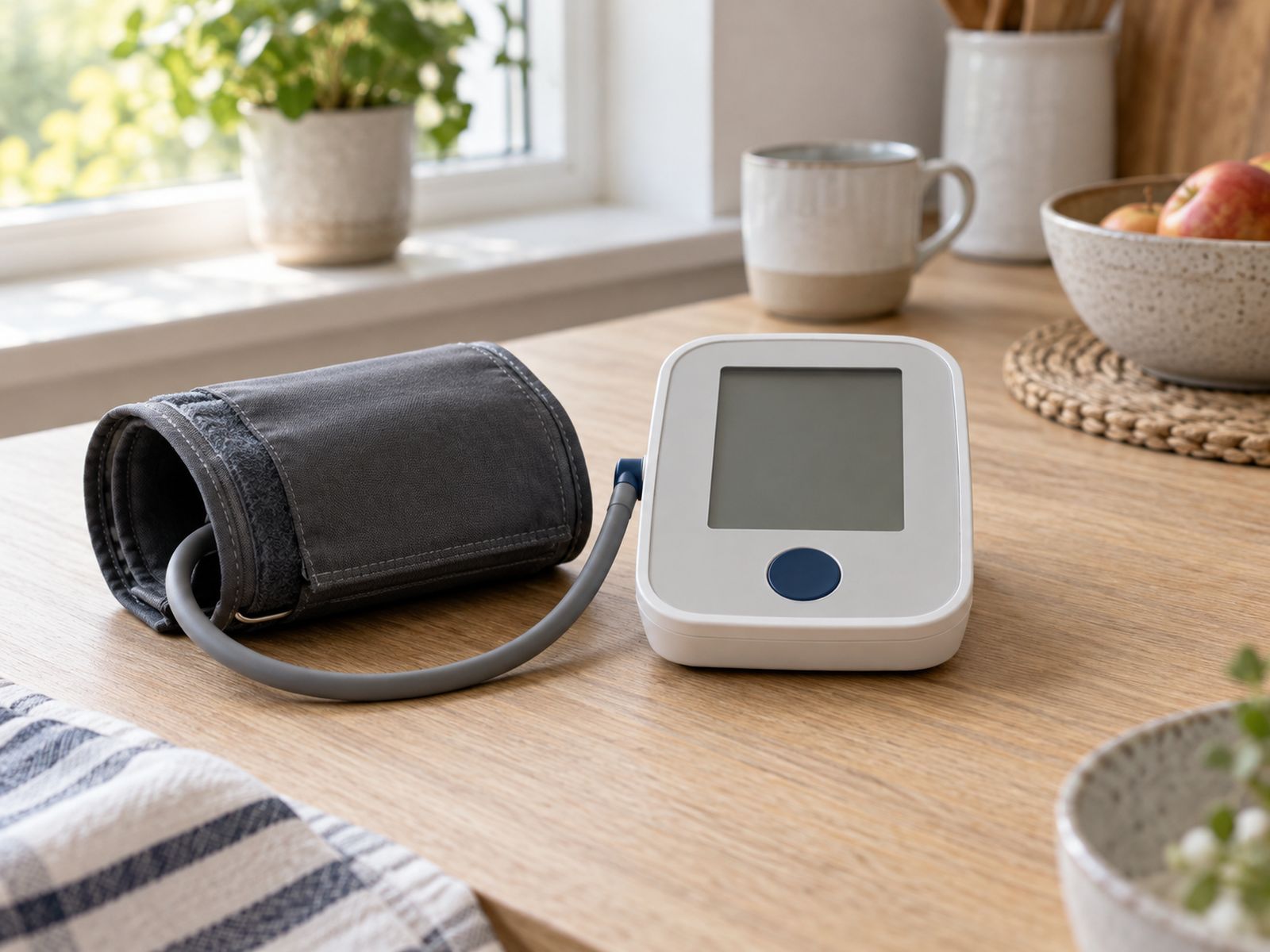
Home readings help too. If your doctor suggests a home monitor:
- Use an automatic upper-arm cuff that fits your arm
- Avoid caffeine, exercise and smoking for 30 minutes beforehand
- Sit quietly for five minutes first, with your back supported and your feet flat on the floor
- Rest your arm on a table at about the level of your heart
- Write down each reading with the date and time, and bring the log and your monitor to your next visit
Everyday habits that help
Small, steady changes add up. In general, these help lower blood pressure or keep it healthy:
- Eating more vegetables, fruit and whole grains, and less salt and processed food
- Being active most days. A brisk walk counts.
- Reaching and keeping a healthy weight
- Limiting alcohol and not smoking
- Getting enough sleep and finding ways to manage stress
If your doctor prescribes medicine, take it as directed and keep taking it even when you feel fine. Don't stop or change it without talking to your doctor first.
Not sure what your blood pressure is? Request an appointment or call (281) 984-4550. Ongoing care for conditions like high blood pressure is part of primary care at V-Care.
Common questions
Can you have high blood pressure and feel fine?
Yes, and most people with it do. High blood pressure usually causes no symptoms, even when it's high enough to be doing harm. Regular checks are the only reliable way to know.
Are home blood pressure readings accurate?
They can be, if you use an upper-arm cuff that fits and measure the same way each time. Bring your monitor to a visit so it can be checked against the clinic's reading. Your doctor will look at your home log alongside your office readings.
Can high blood pressure be lowered without medicine?
For some people, yes. Eating less salt, being more active, losing extra weight and limiting alcohol can all lower blood pressure. Many people need medicine as well, and that's common. Your doctor will help you decide what fits you.
What should I do if my blood pressure reading is very high?
If it's higher than 180/120 and you have chest pain, shortness of breath, back pain, numbness or weakness, vision changes or trouble speaking, call 911. If you feel fine, wait five minutes and measure again. If it's still that high, contact your doctor right away.
Related care at V-Care
This article is general information, not medical advice for your situation. If you’re worried about a symptom, call us or, in an emergency, call 911.